Written by: Briain Kelly, Editor
Businesses in Ireland are increasingly adopting electric vehicle charging to provide an added service for employees and customers with electric vehicles.
Having EV charging options at your business can help to attract customers and make it much easier for employees to save money commuting.
Cost of Commercial EV Charging Stations
There are many factors that govern the cost of installing EV chargers for a business. Prices can vary depending on the price of the unit, and the cost to install and connect it.
Commercial EV Charger Unit Pricing
AC or DC: Rapid and High Power DC chargers will cost considerably more than Standard AC chargers.
Charge Points: Some units will only have one charge point, while others can allow two or more cars to charge at the same time.
Charger Strength: The higher the power output of the EV charging station, the higher the price will be.
Smart Features: The more smart features a charging station has, the more expensive it will become compared to a lower model plug-and-charge device.
Brand: Some companies with highly recognised brands may charge more for units with the same features as other, less well known brands.
Commercial EV Charger Installation Costs
No. of Chargers: The more charging stations that are being installed, the higher the price will be.
Electrical Infrastructure: The electrical upgrades, cabling, and other infrastructure required to connect the EV charging network.
Groundworks: Site works needed to enable the installation of the chargers and their associated electrical infrastructure.
Ongoing Maintenance: The units may require maintenance and monitoring after being installed, which can add to the overall cost.
Government Support For Commercial EV Charging
There are no direct grants for businesses to install commercial EV chargers. However, there are other financial support options available.
The Accelerated Capital Allowance allows businesses to deduct 100% of the cost of installing energy-efficient equipment from their taxable income. This includes EV charging stations and electric vehicles.
Businesses may also reclaim VAT on the cost of EV charging, provided that this is for business use only.
What Type of Charger Does Your Business Need?
EV charging stations come with a wide variety of power outputs. The right charger for your business depends on who will be using it and how long their vehicle will be parked.
The chargers needed for rapid vehicle fleet turnaround are completely different from what is best for staff who leave their car plugged in while at work.
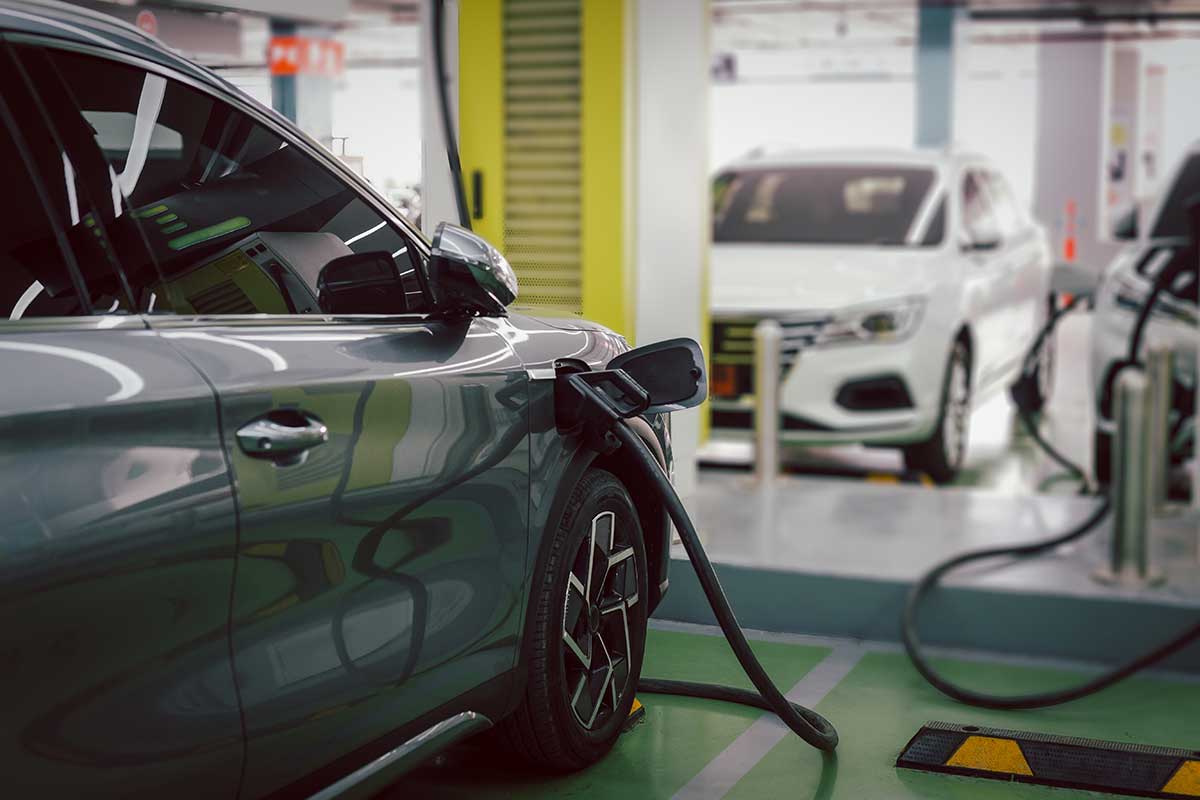
These are ideal for EV fleet charging that is done overnight, or for employees who have their car parked at the business for the entire working day. Fill up the battery in 3 – 8 hours with 22kW AC chargers.
A DC charger of 50kW+ is ideal for customers who will only be spending a short time parked. They are also essential for electric vehicle fleets that are on the road a lot during the day. These fleets need a quick turnaround if they stop to charge. With a rapid charger, you can fill almost any EV battery in 1-2 hours.
Modern EV Chargers can come with multiple smart features that are highly useful in a commercial environment.
Scheduled Charging: Set your vehicle fleet to charge overnight using cheaper electricity to keep overheads to a minimum.
RFID Controls: If you have chargers meant for staff use, it is best to stop just anyone from using them. RFID control fobs can ensure that charging is only enabled for authorised individuals.
Load Balancing: With a large number of charge points in operation, there can be significant fluctuations in electricity demand. Load balancing distributes electricity intelligently between chargers to prevent the electricity supply from getting overloaded by excessive demand.
Public vs Private Commercial Chargers
Electric vehicle chargers at a commercial site can be owned and controlled by either the public or private sector. This can affect both who they are meant for and what the cost is to the business and users.
Public Chargers
Available For: Anyone using a publicly available space, such as a car park or shopping centre parking.
Owned By: These may be owned by the local authority or by a private company that is making them available to the wider public.
Cost to Use: Likely to have a lower cost to use since they serve as a utility, not a business.
Private Chargers
Available For: Private vehicle fleets or for staff and customer use in company car parks.
Owned By: Owned directly by the business or another company they have engaged as the charge point operator.
Cost to Use: Likely to have a higher cost since they are a business enterprise meant to turn a profit.
Understanding the True Cost Benefits of an EV Fleet
Converting your vehicle fleet to EVs can save hundreds of euro each year per vehicle across a wide range of areas.
The motor tax for cars is calculated based on their CO2 emissions. If your business operates multiple cars, EVs will pay the lowest rate of €120 per year.
Electric Vehicles have lower maintenance costs for regular usage due to the lack of moving parts in the engine. Oil and filters will not need to be replaced, and parts don’t wear out as quickly.
The cost to drive an electric vehicle can be considerably lower than a petrol or diesel equivalent. This is especially true if you have cheaper night time rates.
How Much Does It Cost to Charge an Electric Vehicle?
The cost to drive an electric vehicle could be as little as €3 per 100km if you make use of nighttime charging for your vehicle fleet. This is half the price of an equivalent petrol or diesel vehicle.
4 Key Advantages of Commercial EV Charging
Attract New Customers & Increase Foot Traffic:
Providing a place for customers to charge their electric vehicles can help make your business a more attractive option when looking for places to shop.
Boost Staff Loyalty & Retention:
Having a place to charge their electric car, especially if they are not paying for it, can also be a very attractive feature for employees who commute to work.
Facilitate Fleet Electrication & Savings:
Take the plunge into electrifying your vehicle fleet, with all the savings that come with it. EVs benefit from reduced motor tax, avoid carbon tax on fuel, and generally cost less to run.
Enhance Green Reputation:
Promoting sustainability in your company can help to improve its reputation at a time when customers are more conscious of environmental impacts.
7 Step Commercial EV Charging Station Installation Process
Installing large scale commercial EV charging network is trickier than fitting a home charger. This is due to the scale of the project. Also, connecting many chargers to an electrical grid across longer distances is challenging. Here is the typical process:
- 1
Site Assessment: A qualified installer needs to assess your business and the site for the EV chargers. This includes steps such as seeing where it is both feasible and advantageous to install chargers. The installer will also need to know about the level of work required for the charging network infrastructure.
- 2
Hardware Selection: You must choose how many chargers and what types you want to install at your business. This can include whether to go with standard AC or rapid DC chargers, how many charge points each unit needs, and more.
- 3
Electrical Upgrades: Depending on your premises, the electrical system may need to be upgraded before installing EV chargers. This can require changing from a single-phase to a three-phase system for smaller businesses.
- 4
Installing Chargers: Having the charging units installed can include more intensive work, such as setting concrete bases to hold larger units.
- 5
Groundworks: Connecting the chargers to your premises’ electricity supply will include groundworks such as digging trenches to lay cabling connecting the charging stations to the building.
- 6
Electrical Connection: With all the hardware in place, it is time to connect the charging stations to the electrical system.
- 7
Testing & Monitoring: The charging stations must be tested before being handed over to the customer. An O&M system will also be installed to allow you to control and monitor your new EV charging system.
Commercial EV Charging FAQs
Yes, absolutely. You can install commercial EV chargers, which turn a profit by charging market prices for customers to use while they are parked at your business.
It depends on the scale and location. Rules can vary between local authorities, and whether the work will impact an area such as a car park or the street. Always check local authority rules before beginning a major installation.
In most cases, yes. Commercial EV charging networks use a lot of power, and upgrades to the electrical system may be needed to safeguard it. Small businesses may also need to upgrade from a single-phase to a three-phase electricity supply.
Yes, with load balancing systems in place, you can use EV charging stations without overloading the electricity supply during peak business hours.