Written by: Briain Kelly, Editor
There are many different types of heat pump systems available in Ireland. These differ in the heat source they use, how that heat is delivered, and whether they operate alone or in tandem with a boiler.
Air-to-Water Heat Pumps
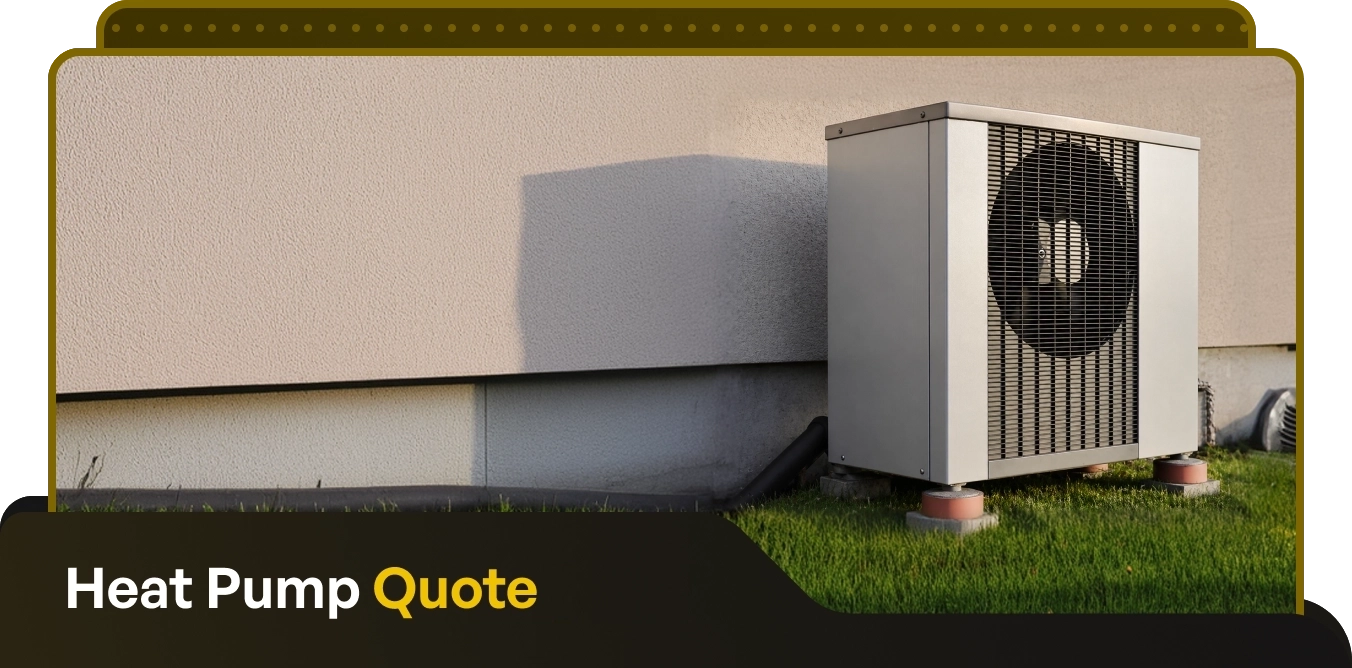
Air-to-Water heat pumps are by far the most common variety in Ireland for reasons of price, convenience, and utility. The main characteristics of an air-to-water system are:
Heat From Source: A fan unit extracts heat from the outside air.
Heat Delivery: This is used to heat water for central heating and domestic hot water.
Advantages: Can be easily integrated with a central heating system. Installation work is simpler.
Disadvantages: Efficiency can vary with changes in the outdoor temperature.
We’ve covered air-to-water heat pump systems in far more detail; how much they cost and how they operate, on their own page.
Other Types of Heat Pumps
While air-to-water heat pumps are the most common, there are multiple other types of systems available. These have either a different heat source or heat your home differently.
- 1Ground Source Heat Pumps
- 2Water Source Heat Pumps
- 3Air-to-Air Heat Pumps
- 4Exhaust Air-to-Air Heat Pumps
All of these systems use the same vapour compression principle as air-to-water heat pumps.
- 1The refrigerant absorbs ambient heat from its designated source.
- 2It is then compressed to raise the temperature and pressure.
- 3The stored heat is then released to another medium inside the home.
- 4The refrigerant returns to the start of the cycle.
Alongside air, ground, and water source systems, there are also hybrid heat pumps. These do not have a specific source or heating method. Rather, it involves a heat pump working together with a small boiler.
Ground Source Heat Pumps
What is a Ground Source Heat Pump?
A ground source heat pump transfers heat stored in the ground into your home to provide space heating and hot water.
These are sometimes preferred to air source systems because the ground has a more consistent temperature than the air. This gives them a higher overall efficiency throughout the year.
Ground Temperature: Soil temperatures in Ireland typically average 10℃ – 11℃ over the course of the year.
Ground Depth: That Met Éireann data comes from a depth of 10cm, while ground source systems are buried deeper than this.
Temperature Fluctuations: The deeper underground you go, the less the temperature fluctuates.
How Ground Source Heat Pumps Work
In a ground source heat pump, refrigerant is pumped through a large loop of piping in the ground. This allows it to pick up heat from the ground as it cycles to and from the main unit.
This loop is laid out in one of two ways: horizontally or vertically.
A large closed loop of piping is buried in the ground approximately 1m deep. Heat is drawn from a large area of the ground closer to the surface. This requires you to have a large area of space to work with.
A borehole up to 120m deep is drilled, and a loop of piping is inserted into it. Heat comes from the vertical cross-section of the ground. Specialised tools are needed to dig the borehole.
In either setup, the refrigerant is pumped continuously through the loop to absorb heat from the ground. This heat is then transferred to the central heating system or hot water cylinder inside your home.
Power is not needed for a fan like with an air source system. However, a stronger pump may be required for a ground source system, especially with a vertical layout.
Pros and Cons of Ground Source Heat Pumps
Pros:
Higher Efficiency: Ground source heat pumps are highly efficient, as the ground retains heat better than air. This makes it less affected by temperature swings between day and night, and by season.
Less Noisy: A ground source heat pump makes less noise since it does not require a large fan unit.
Long Lifespan: Ground source heat pumps last longer than air source systems since they are more shielded from the elements.
Good for New Builds: GSHPs can be easily installed in new build homes during construction with no disruption.
Cons:
Large Space Requirement: A GSHP requires a significant amount of space. If installed horizontally, they require up to 1,000m². A vertical borehole takes less surface space, but needs to go up to 120m deep.
High Installation Cost: The groundworks required for a GSHP make it significantly more expensive than an air source system.
Disruptive for Retrofits: This work also makes it very disruptive to retrofit an existing home with a ground source system.
Water Source Heat Pumps
What is a Water Source Heat Pump?
A water source heat pump uses the ambient heat in a body of water near your home to provide space heating and hot water for your home.
Energy is extracted from the water to heat a refrigerant, which in turn provides heat to your home. It does so efficiently even in cold weather because a body of water retains heat better than air.
How Does a Water Source Heat Pump Work?
Water source heat pumps can be designed as an open or closed loop system. A closed-loop system moves refrigerant through pipes submerged in a body of water. An open-loop system moves a lot of water through the heat exchanger where the refrigerant is.
- A loop of piping connected to the main unit is laid down in a body of water.
- Refrigerant is pumped through this loop of pipes, extracting heat from the water as it goes.
- The refrigerant goes through the standard vapour compression cycle to deliver heat.
- Two boreholes are dug, the first of which is used to bring water up to the heat pump.
- Water is pumped up from one borehole, and energy is extracted through a heat exchanger.
- The cooler water is then pumped back down the other borehole to continue the cycle.
Open-loop systems tend to be more efficient than closed-loop systems. They use more fresh water with greater potential heat to draw on.
Pros and Cons of Water Source Heat Pumps
Pros:
Higher Efficiency: Water source heat pumps can reach up to 600% efficiency because water retains heat better than air. This gives it a steadier temperature.
Visually Unobtrusive: There is no large outdoor fan unit taking up space.
Less Noise: Without the fan unit, a water source heat pump makes less noise than an equivalent air source system.
Cons:
Maintenance Costs: Open-loop systems, in particular, can have higher maintenance costs. They may be subject to blockages or freezing in very cold temperatures. They require regular inspection to prevent these issues from becoming serious.
Location Specific: Water source systems can only be used if you live close to a suitable body of water.
Air-to-Air Heat Pumps
What is an Air-to-Air Heat Pump?
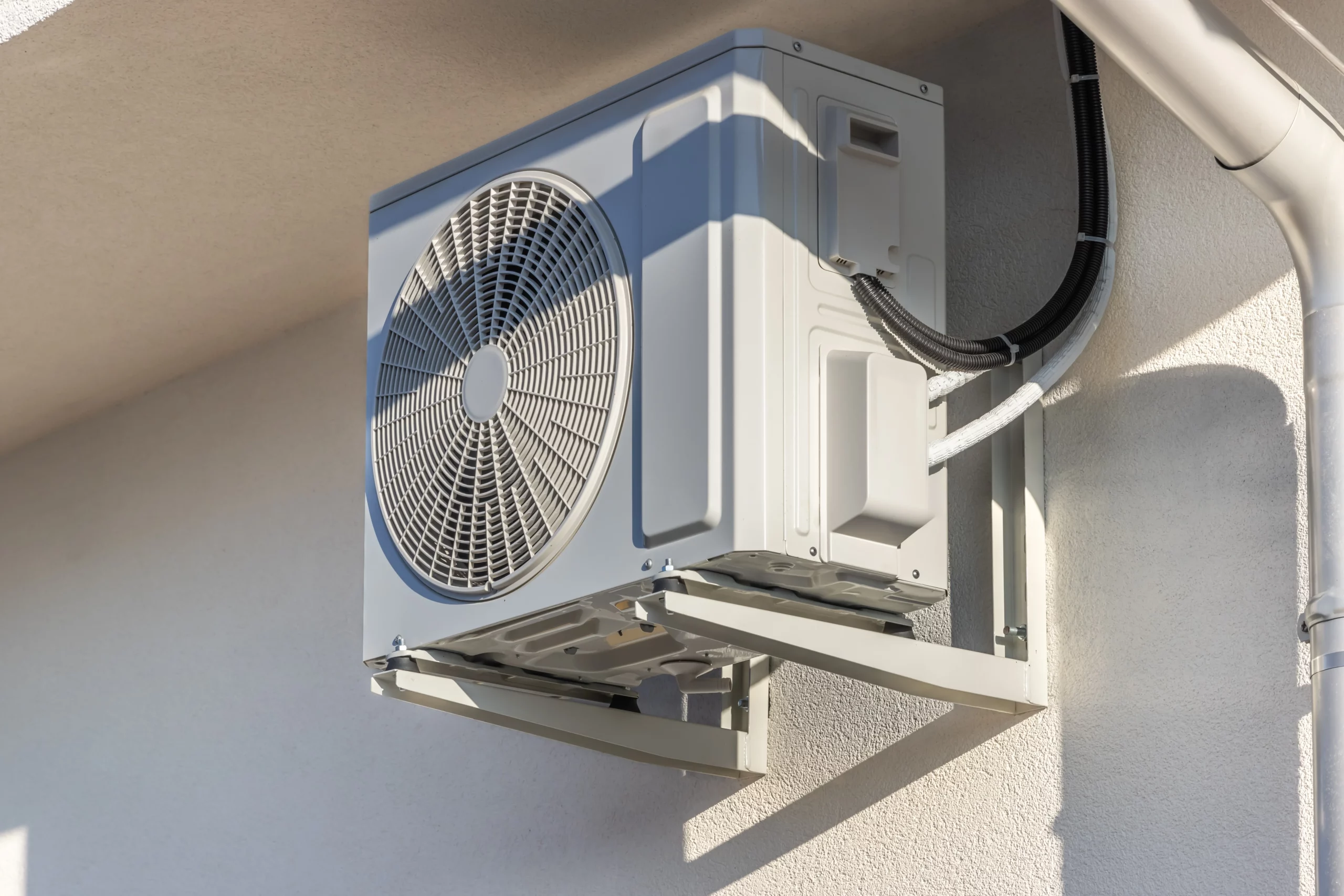
An air-to-air heat pump draws heat from the outside air, similar to an air-to-water system. It differs from most other heat pumps in that it directly heats the air in a room with fan units. This is instead of making hot water for radiators or underfloor heating.
Air-to-air systems essentially work the same as air conditioners, but in reverse, transferring heat into your home, rather than out of it. This can make them highly efficient as it is easier to raise the temperature of air than water.
How Air-to-Air Systems Heat a Home
An air-to-air system works a lot like air conditioning, simply in reverse. It operates the same as any other heat pump until the refrigerant enters the building. Inside, the hot gas is carried to multiple units in different rooms rather than to a single heat exchanger.
Air to Air
1. External Fan Unit Extracts Heat: The outside unit extracts heat from the surrounding air.
2. The Refrigerant Is Compressed: The refrigerant is compressed to further raise its temperature.
3. The Heat Is Transferred: The gaseous refrigerant, once compressed, is then pumped inside and around your home. This is done in pipes that connect to all of the rooms you wish to heat.
4. Fan Units Distribute Heat: Fan units are installed high up on the wall. As air passes through the indoor units, it is heated by the pipes carrying the hot gas.
5. The Refrigerant is Recycled: The refrigerant returns to its starting point, and the cycle repeats.
Pros and Cons of an Air-to-Air Heat Pump
Pros:
No Heating System Retrofit: Because it is not a wet system, you will never need to replace any radiators or other elements of the old central heating system.
Can Also Be Used For Cooling: An air-to-air heat pump can also be run in reverse to provide cooling on hot summer days. It does this better than systems which heat water.
Take Up Less Space: The indoor units for an air-to-air system are typically small and set high on the wall. There is also no need for a secondary heat exchanger (condenser) since no water is being heated.
More Efficient Heat Transfer: It takes less energy to raise the temperature of air than water, which means that an air-to-air system can be more efficient than central heating alternatives.
Cons:
No Hot Water Production: You will still need a boiler to make domestic hot water for your home.
More Indoor Units Required: An air-to-air system will require a fan unit for every room in your home that you want to heat.
More Extensive Installation: You will need to install piping connecting every room that is to have a heating unit to the heat pump itself.
No Fresh Air: They do not blow fresh air into a room, simply cycle the air already there. Your home will still need good ventilation, the same as with any other heating system.
When Air-to-Air Heat Pumps Make Sense
An air-to-air heat pump could be preferable to other options requiring a central heating system in certain circumstances.
- 1
Small Homes with Little Space: An apartment or very small property which only has a few rooms can be easier and more affordable to heat with an air-to-air heat pump. Fewer rooms require fan units, and you don’t need to find space for a hot water cylinder.
- 2
No Existing Radiators: Some smaller homes, such as apartments again, may have storage heaters instead of radiators. An air-to-air system means you won’t have to install wet central heating at the same time as a heat pump.
- 3
Highly Airtight Homes: If your home already has extreme airtightness, with very good insulation making a complete seal, it can be more economical to heat the air directly with a heat pump. This is common in Scandinavian countries, where air-to-air heat pumps are popular.
Exhaust Air Heat Pumps
What is an Exhaust Air Heat Pump?
An exhaust air-to-air heat pump system uses mechanical ventilation systems in newer homes or larger buildings to extract heat from ‘exhaust’ air being removed from the building. Once this heat has been extracted, it works the same as the air-to-air system outlined above.
In some cases, exhaust air systems can also be used to provide domestic hot water for a building.
How Exhaust Air Heat Pumps Work
All homes and buildings need to bring in fresh air and remove stale air. Mechanical ventilation systems are used in larger commercial buildings and in modern homes that focus on airtightness.
These use extraction fans and ducts in ceiling voids to remove damp and stale air from a building, and replace it with fresh air.
An Exhaust Air Heat Pump improves on any mechanical ventilation heat recovery system (MVHR) by extracting heat from the warm, stale air that is being removed. It then uses that to heat the fresh air being brought into the building.
Pros and Cons of Exhaust Air Heat Pumps
Pros:
Combines Heating & Ventilation: An exhaust air heat pumps systems combine your heating and ventilation needs in a single system
Suitable for Low Energy Buildings: These can be more suitable for homes with very low heating needs compared to other systems. It solves the problem of a potentially oversized heat pump in an air-to-water system.
Simplifies New Builds: This removes the need for installing a wet central heating system, or an oil or gas boiler, in a new build home.
Cons:
Difficult to Retrofit: It can be difficult and expensive to add to an existing home, especially if you also have to install the mechanical ventilation system.
Less Suitable for High Demand: An exhaust air system may struggle in homes with a high heat demand and will need to be complemented with an additional heat source.
Hybrid Heat Pumps
What is a Hybrid Heat Pump?
A hybrid heat pump combines a heat pump with another heating system, typically an oil or gas boiler. This can refer to any type of heat pump, whether it is an air, water, or ground source system.
Hybrid systems are typically considered when a heat pump alone won’t be able to meet all of your requirements. There can be multiple reasons for this, related to heat demand and the space available.
How Hybrid Heat Pumps Work
Heat Pump – The heat pump is the primary heating system, providing most or all of your space heating needs. It can also potentially provide most of your hot water needs, depending on whether you have a hot water cylinder.
Boiler – The boiler acts either as a backup system for the heat pump or is meant to handle all hot water production. It can come on when the heat pump is struggling to meet the demand, or when you need hot water.
Pros and Cons of Hybrid Heat Pumps
Pros:
Provides Greater Flexibility: By combining a heat pump with a boiler, you have more flexibility in how much to heat your home.
Rapid Hot Water: The boiler system can provide hot water on demand, whereas a heat pump alone takes much longer.
Takes Up Less Space: A hybrid system takes up less space in your home than a heat pump and hot water cylinder.
Cons:
Greater Carbon Footprint: You will have a much larger carbon footprint with a hybrid system compared to not having a boiler at all.
Multiple Fuel Types: You will have to deal with bills for both electricity and the fuel for the boiler, either gas or oil, instead of just a single energy supply for your entire home.
When a Hybrid System Might Be Suitable
A Hybrid Heat Pump is useful when a property has a very high energy demand, or is unsuitable for using a heat pump to make domestic hot water.
- 1
High Peak Heat Demand: If your home requires a lot of heating and hot water at peak periods, then a hybrid system can provide support when the heat pump is struggling to keep up.
- 2
No Space for Water Storage: If you don’t have somewhere to put a hot water cylinder, a heat pump simply cannot meet your DHW needs. A combi boiler will then handle domestic hot water production instead of the heat pump.
- 3
When a Heat Pump Won’t Lower Bills: If a heat pump on its own won’t reduce your energy bills due to the price of electricity, then a gas or oil can be used during the time of day when it is cheaper to run than a heat pump.
In the case of meeting peak demand or time of use settings, a hybrid heat pump should have control systems that allow you to program when the boiler will come on.
What Type of Heat Pump is Best For Your Home?

The Budget Available to You
What you are able to afford is the most important consideration before looking at the specifics of different systems. Ground source heat pumps are several times more expensive than other options. Air source heat pumps are the most affordable option.
How Much Space Do You Have?
Ground or water source heat pumps often take up much more space than an air source system. If there isn’t a water source you have legal access to, or a large amount of ground space, then they may not be viable.
Long Term Efficiency
Thinking long term, a heat pump can meet your needs more easily and affordably the higher its efficiency is. If you can afford it, this will bring great benefits over the course of its lifespan.
Your Existing Heating System
Do you have a central heating system in your home that can be connected to a heat pump? If not, then an air-to-air system is likely best. Similarly, if the pipework and radiators need to be completely replaced.
Homes With High Heat Demand
If you have a large home with a very high demand for heat and hot water, then a hybrid system could be the best choice to top up what your heat pump provides.
Dometic Hot Water Needs
Whether you have space for a hot water cylinder, or a very high hot water demand, can also affect your choice. A hybrid system can provide a top-up to most heat pumps, or take over hot water production entirely in smaller homes such as apartments.
FAQs
It depends on your needs. Ground source heat pumps are more efficient than air source systems. However, they also cost much more, take up more space, and are more complicated to maintain.
Air-to-air heat pumps require a very high level of airtightness in your home to be effective. Many Irish homes don’t meet this requirement. Air-to-air systems also don’t provide hot water in most instances.