

Table of Contents
- 1
- 2
- 3
- 4
- 5
- 6
- 7
- 8
Public EV Charging Stations
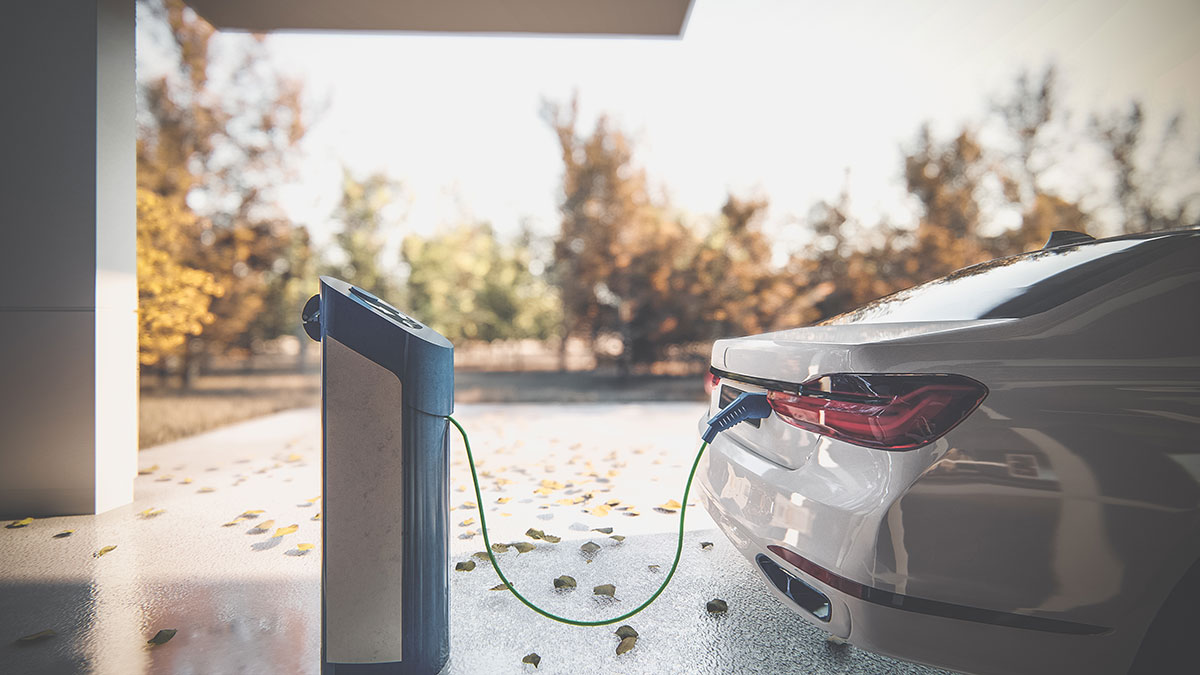
Public EV charging stations fill the role of filling stations in that they can give people a way to charge their electric cars on long journeys. For many people in towns and cities, public charging is currently the only way to charge an electric car. This makes it important to know how it works and what your options are.
Key Takeaways
- 1
Locations: Public Charge Points can be found at filling stations, car parks, and other dedicated locations.
- 2
Speed: Public charging stations can have high power DC charge points that will fill your battery more rapidly than home charging.
- 3
Cost: It is always more expensive to use public charging stations than to charge at home.
How to Find an EV Charging Station Near You
Ireland has an ever growing network of public electric car charging stations. These can be found in many different places around towns, cities, and the country’s road network.
Some of the most common places to look for charging stations are:
- Filling Stations
- Motorway Service Stations
- Supermarkets
- Shopping Centres
- Car Parks
- Hotels
- Leisure Centres
- On Street Parking
Tip: Different EV charging network providers will likely have a map of app service which can tell you where to find their chargers, and point you to the nearest one available.
EV Charging Stations Map
The most reliable way to find available charge points is using a real-time service map. You can view the current network using platforms like OpenChargeMap.
How Many EV Charging Stations in Ireland
Ireland currently has over 8,500 public EV charging stations around the country. The utility and speed of this network depend on key factors:
Charge Point Concentration: The number of chargers that are clustered in each location. Some spots may only have one or two charge points, while others could have a dozen or more.
Connector Type: What type of connectors are available at each charging location, and whether the location has a connector compatible with your vehicle.
Charging Speed: Ireland has fewer high-power charging stations than needed for quick charging.
The vast majority of public chargers are Type 2 connectors, which are the standard for AC charging in Ireland and Europe. There is also a growing number of CCS (Combined Charging System) connectors used for rapid and high-power charging. Some older CHAdeMO DC fast chargers are also present.
The Irish Government plans to have at least 150,151kW worth of EV charging stations installed along the motorway and national roads network by 2030. Along with that, a further 562,244kW of charging capacity is intended for towns, villages, and residential neighbourhoods by 2030.
These two plans aim to make public charging convenient and accessible for people making long journeys, and those without easy access to home EV chargers.
This will require thousands of new EV charge points of different strength levels spread across the country. It aims to make public charging freely available both for people making journeys, and for people who don’t have easy access to home chargers.
Cost of Charging with a Public EV Charging Station
Public EV charging stations charge users per kWh of electricity, the same as charging at home. The total price paid for your charging session will vary depending on four factors:
Charger Strength: High Power chargers typically cost more to use than standard chargers, as they are more expensive machines.
Charging Network: There are many operators in Ireland. Each is allowed to set their own prices.
Changing Method: You may be charged different rates depending on whether you are a member of that network.
Overstay Fees: Most charging networks have a time limit for how long you can stay connected. An overstay fee is applied after you have exceeded that threshold.
How to Pay for Public EV Charging
Most public EV chargers in Ireland now accept contactless payments (bank card). This allows you to simply plug, tap and charge.
Some older chargers may not be set up to allow contactless and will still require you to have that network’s app installed.
There is another reason to have a charging network’s app. Depending on your charging network, there might be two price tiers for each kWh of electricity.
- 1
Membership Pricing: What you are charged if you have a membership with that specific charging provider.
- 2
Pay as You Go Pricing: Higher rates for people who do not have a membership, and simply use the charger that is closest to the.
Overstay Fees for Public Charging
An overstay fee is a charge that is applied when someone has stayed connected to an EV charger longer than the network permits. Overstay fees ensure that the charger is kept available for the next driver.
The primary factors governing overstay fees are:
- 1
Time Before Fee: The length of time before the overstay fee kicks in. This may differ between standard and high power chargers. High-power chargers may have a much shorter allowed time. Some standard chargers may not have overstay fees.
- 2
Fee Applied: The price per minute you are charged for overstaying a charging session. This is typically in the region of €0.50 per minute
- 3
Max Overstay Fee: Some networks may cap the maximum possible overstay fee. However, this is likely to be €20 or more, a hefty price to pay for charging your car.
Types of Public EV Charging Stations
The main difference between charging stations is the speed they offer. Speed differences between standard chargers and rapid or high-powered charging stations depend on whether they use AC or DC power.
To understand why it is important if you use AC or DC Charging, let’s look at the basic facts first.
Battery Storage: Batteries, like those in electric vehicles, store power as direct current (DC).
Electric Infrastructure: Electrical grids use alternating current (AC) because it’s easier to transmit over long distances than direct current.
Power Conversion: Electricity needs to be converted from AC to DC before it can be stored in your battery.
If you are using an AC charger, the onboard charger in your electric vehicle handles the conversion. AC chargers are limited to 22kW speeds. Many vehicles’ onboard chargers can’t even handle that much.
With a DC charger, the conversion happens in the charging stations before sending the power to your car, bypassing the onboard charger altogether. This is why DC chargers can have charging speeds of anywhere from 50kW to 400kW+.
Standard EV charging stations come with a charger speed of between 7kW and 22kW. These can be found at filling stations, but they are also the most common at public street side and car park charging.
Charging Time: A 22kW charger can fill a 60kWh battery from 10% – 80% in approximately 2 hours if your car can accept 22kW AC. At 7kW, it would take approximately 6 hours for the same charge.
Charger Connector: Almost all standard chargers in Ireland use the Type 2 connector. Some older car charging stations may still have Type 1 connectors.
Charging Limit: Many cars will not accept 22kW AC charging speeds, and you will be limited to 7kW or 11kW.
Fast chargers are more commonly found at motorway stations when people need to charge in a hurry. However, they are also becoming more common elsewhere.
Charging Time: A 100kW charger can fill a 60kW battery from 10% – 80% in 25 – 30 minutes.
Charger Availability: Roughly 23% of CCS charge points in Ireland are 50kW chargers. Other chargers, varying from 24kW to 100kW, make up another 14% of CCS chargers in Ireland.
Charger Connector: Fast Chargers in Ireland are a mix of CCS and CHAdeMO charger types. But the balance is swinging towards CCS as it has become the standard model.
High Power Chargers are available at filling stations along motorways and national roads, as well as other specialised locations. They can potentially charge your battery to nearly full in just a few minutes.
Charging Speed: A 200kW Charging Station can charge a 60kWh battery from 10% to 80% in only 12 minutes if the car allows it.
Car Compatibility: All electric vehicles have a limit on how fast they can charge.. Some could max out at 150kW, while others may be able to accept 400kW or more.
Charger Connector: Almost all high-power chargers in Ireland use the CCS connectors, as they are the legal standard for new chargers.
Charger Availability: In Ireland, almost 1,000 high power charge points offer speeds of at least 150kW.
Get a Home EV Charging Station
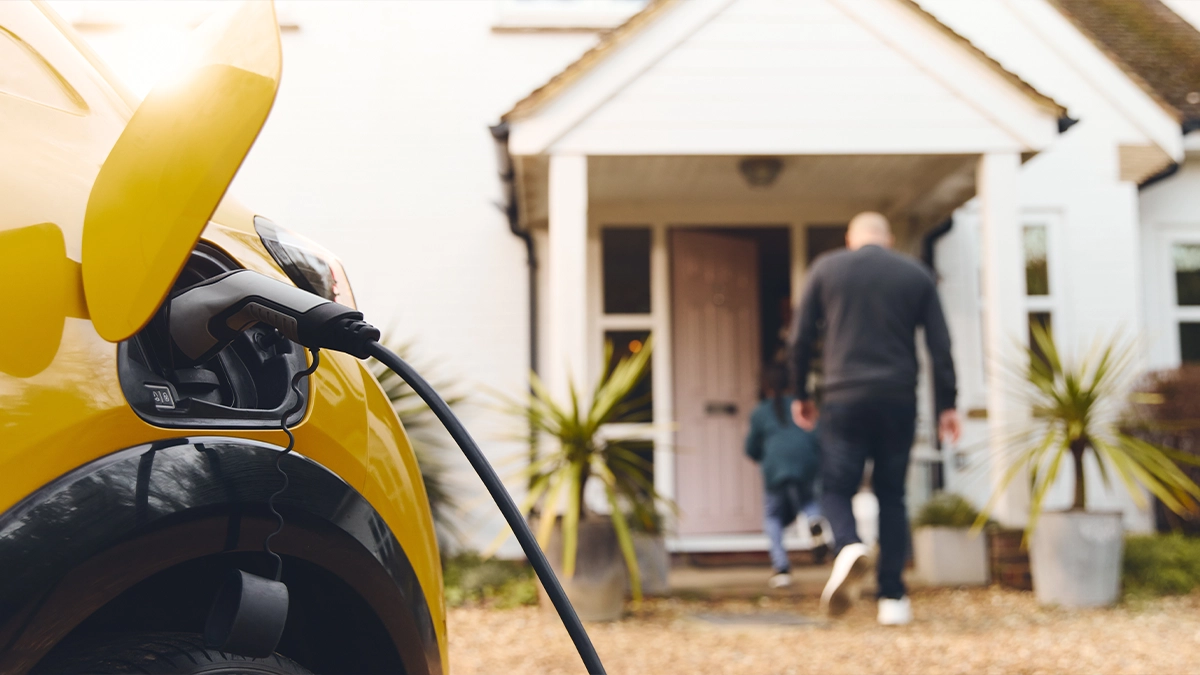
Public charging infrastructure is essential for large scale electric vehicle usage. However, installing a home EV charger remains the most reliable and affordable way to run an electric car.
It will cost you between €800 and €1,600 for a home EV charger, which can be reduced by a €300 SEAI grant. On the other hand, it could cut your driving costs in half compared to a petrol or diesel car.
Benefits of a Home EV Charging Station
A home EV charger will always be available and ready for you. This is unlike a public charging station, where you can be waiting at the back of a queue for other people to finish. That can be a serious problem if you are worried about your battery charge.
Charging an electric car at home can cost you as little as 5c -10c per kwH if you have the right electricity plan for nighttime charging. In comparison, public charging will cost you roughly 50c per kWh. That’s five or ten times more expensive than home charging.
After installing the connection for an EV charger at your property, anyone can easily attach a charge point. This is a home improvement that can increase the value of a home, especially as electric cars become more common.
Frequently Asked Questions
Yes, you can utilise any public EV charging station. You are not limited to specific network memberships or car brands (provided the connector fits).
It is advised that you keep your EV battery topped up to 80% and avoid charging it to 100% every time in order to prolong the battery’s lifespan. Charging to 80% also takes less time when using public charging.
VAT Rate: Public charging comes with a higher VAT of 13.5% compared to 9% for home electricity.
Infrastructure Cost: Public charging networks also have additional costs from installing infrastructure and more expensive rapid and high-power chargers.
Operation and Maintenance: Operators must also recoup their maintenance costs and turn a profit on their business.
