Written by: Briain Kelly, Editor
Poorly insulated walls can be responsible for up to 30% – 35% of your home’s heat being lost, costing you a lot on heating bills. Internal wall insulation is one of two methods of insulating solid walls, with a layer of insulation added to the inside surface of the wall. This is a highly practical way to make your home more comfortable and energy efficient.
What is Internal Wall Insulation?
Internal wall insulation consists of a layer of insulation material attached to the interior surface of your home’s walls. Also known as dry lining insulation, this helps reduce heat loss through exterior walls, but will also result in you losing some of the space inside your home.
Internal insulation is usually chosen when your home has solid walls, rather than a cavity. It can also be a good choice if you want to insulate specific rooms, to stop heat from escaping into rooms used less often.
Internal insulation can also help to reduce condensation by raising the temperature of the interior surface of the wall. However, if you have persistent issues with damp these should be addressed separately first.
Cost of Internal Wall Insulation
Internal wall insulation can be a considerably less expensive option for insulating solid walls than external insulation. However, it also costs far more than cavity insulation if that is an option.
The median price of internal wall insulation is between €4,000 and €11,000, depending on your home. For an average semi-detached house, internal insulation will cost approximately €10,500. It should be noted that your costs could be less if you are only doing select rooms or specific exterior walls.
Source: SEAI data on costs submitted for Better Energy Homes scheme from Jan – June 2025
Internal Wall Insulation Grants
The SEAI provides grants to homeowners to assist them with the cost of improving their home insulation. The grant for internal insulation is available to homes built and occupied before 2011. The value of the grant depends on the type of home that you have.
Read more in our guide to Home Insulation Grants.
Factors That Affect the Cost
Insulation Framework: If you need to build a stud wall for your internal insulation, it will make the job much larger and more expensive. Battens and fixing insulation directly to the wall are more affordable options, but not always suitable.
Insulation Type: Different insulation materials are more expensive than others. Insulation plasterboard, for example, will cost more for the same coverage than mineral wool insulation.
Property Size: The larger your home and the more rooms which you are applying dry lining to, the greater the cost of the project will be.
Labour Costs: The price of the installation work will vary between different installers and can contribute significantly to the overall cost.
Accessibility: If you are working in spaces that are difficult to access, such as narrow corridors or awkwardly shaped rooms, this can affect the complexity of the project.
Internal Insulation Components
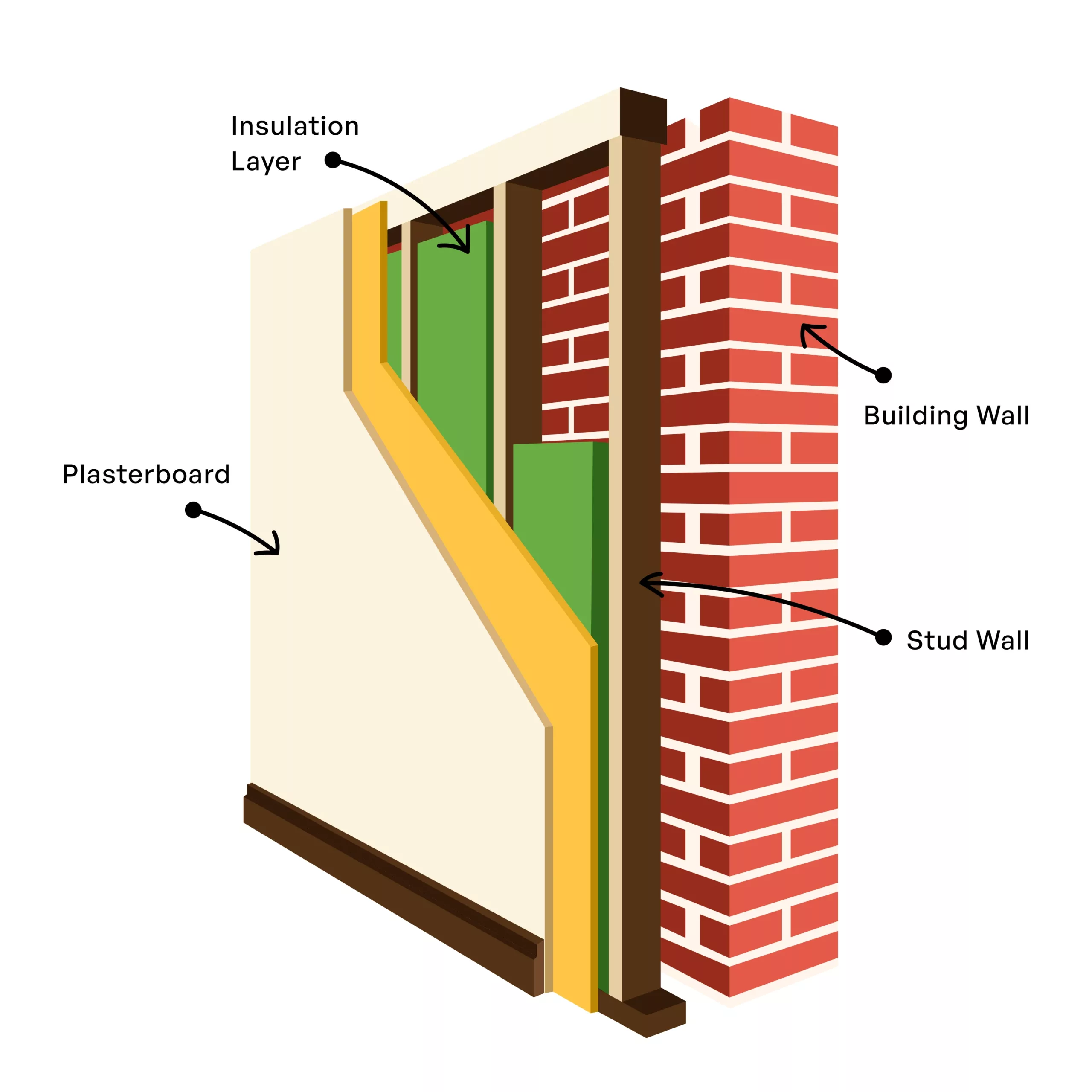
An internal wall insulation system consists of multiple layers of different materials beyond just the insulation itself.
- 1
Insulation Material: The insulation you have chosen to use for your internal system.
- 2
Adhesives: Adhesive mortars are sometimes used when attaching solid insulation directly to a wall.
- 3
Battens & Studs: The framework, usually wooden, which holds the insulation material in place if it is not being fixed directly to the wall.
- 4
Vapour Control Layer: A membrane applied to the warm side of the insulation to stop humid air from entering the insulation and causing interstitial condensation.
- 5
Finishes & Plastering: In order to have a smooth finish on your wall, a layer of plaster is sometimes applied at the end. This makes it easier to paint or wallpaper over the wall.
Best Types of Internal Wall Insulation
Mineral wool is made from glass or stone melted down and spun into fibres. These are then condensed into larger blocks and rolls of material.
Strengths: Inexpensive, completely fire resistant, and gives excellent acoustic insulation. It is also very easy to apply.
Weaknesses: Thermal performance is not as good as solid board insulation. It also requires a significant thickness to work well. This uses up a lot of space on internal walls.
This combines a layer of insulation bonded directly with a plasterboard sheet. Popular for internal insulation since it provides both insulation and a clean plaster finish.
Strengths: Simple to install and provides a flat surface that is easy to apply paint or render to. Can work with stud walls, battens, or directly onto walls.
Weaknesses: Susceptible to physical damage and can create condensation risk if badly applied. It is typically more expensive than buying insulation and plasterboard separately. Not suitable for walls with existing damp issues.
A fully natural alternative to mineral wool. Sheep’s wool is a good insulator and highly breathable. Rolls of sheep’s wool are a popular choice for their environmental friendliness.
Strengths: A breathable material, making it an excellent choice where moisture is a concern. Good thermal and acoustic insulation. Sheep’s wool is an all-natural insulation.
Weaknesses: More expensive than other insulations. It also requires a greater thickness than solid boards for the same thermal performance.
These are boards of polyisocyanurate (PIR), extruded polystyrene (XPS), and expanded polystyrene (EPS) boards. They offer strong R-values and are very moisture-resistant materials, ideal for solid walls.
Strengths: Provides a good thermal performance with thin boards, is easy to handle, and can be fixed directly to the wall.
Weaknesses: These materials can be more expensive than mineral wool. In particular, the high-performing PIR boards.
How to Attach Internal Wall Insulation
There are three different ways to attach internal insulation to your walls. Which is best for your home will depend on the insulation you are using and the specifics of your wall.
Mechanical Fixings
What Are They: Heavy duty screws and anchors meant to attach heavy loads to stronger surfaces. They penetrate the insulation and go directly into the wall.
What Insulation Can Use Them: Rigid foam boards (PIR, XPS, EPS) and insulated plasterboard. These are solid blocks of insulation that won’t wear around the fixings.
What They Need: You need to have a level wall surface if only using mechanical fixings in order to avoid leaving air gaps. They can also be used in conjunction with battens or a stud wall.
Battens and Frames
What Are They: Vertical and horizontal wooden strips that are attached directly to the surface of the existing wall. These provide a framework to hold the insulation in place and align it correctly. They can also
What Insulation Can Use Them: Most commonly used with mineral wool or sheep’s wool on walls. They can also be used with rigid boards or insulation plasterboards if it would be difficult to attach them directly to the wall.
What They Need: Corrosion-resistant studs are needed to attach the battens to the wall. You must also ensure that the gap between the battens is wide enough to allow the insulation to fit, but not so wide that it leaves gaps.
Stud Walls
What Are They: A stud wall is a freestanding wooden frame with a plasterboard backing. This can be used to divide a room or to create a framework for insulation in front of an existing masonry wall when you want to improve fire or acoustic insulation.
What Insulation Can Use Them: Stud walls are used with all forms of wall insulation, including rigid boards, mineral or sheep’s wool batts, and insulated plasterboard.
What They Need: What a stud wall mostly needs is space, especially if being placed in front of an existing wall.
Benefits of Internal Wall Insulation
Minimal Disruption
Internal insulation can be installed room by room, minimising the disruption to your daily home life.
No Planning Requirements
Planning permission is not needed for installing insulation on the inside of your home, unlike with external insulation.
Improved Property Values
Improving the insulation in your home can significantly raise its BER and the value of the property that goes with that.
Lower Heating Bills
Up to 30% of the heat in your home can escape through the walls. Eliminating or drastically reducing that loss can save you hundreds of euro each year.
External Appearance Unchanged
Internal wall insulation will leave the outside appearance of your home unchanged, unlike an EWI system.
How to Install Internal Wall Insulation
- 1
Assess the Wall Condition: Before doing any work on your walls, they should be assessed for any existing problems with damp, mould, or damage that need to be repaired first.
- 2
Remove Fixtures: Any fixtures on your walls, such as radiators, shelves, cabinets, or counters, will need to be removed. Electrical sockets and plumbing will also need to be addressed and protected so that you can reinstate them afterwards.
- 3
Prepare Wall Surface: Existing paint, plaster, or wallpaper that could interfere with the application of the insulation should be removed if you are using battens or applying insulation directly to the wall.
- 1
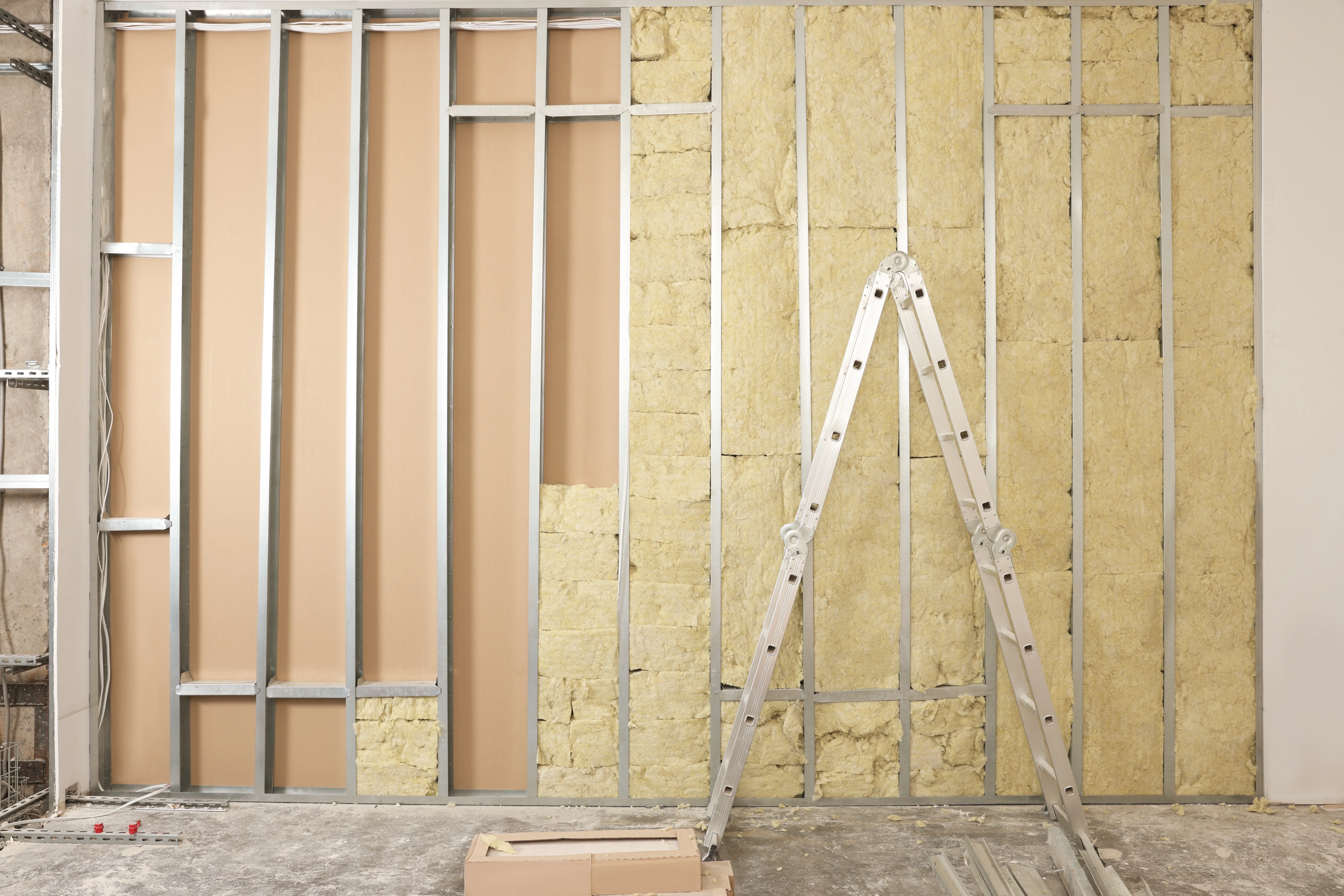
Build Insulation Framework: If you are using wall battens or a stud wall to support your insulation, then these should be built first before starting on the insulation.
- 2
Apply Insulation: The chosen insulation should be applied to the wall, onto the battens, or inserted into the stud wall as needed.
- 3
Vapour Control Layer: Add a vapour control layer to the warm side of the insulation if one is needed to prevent condensation issues.
- 4
Apply Finish: Once the other layers have been installed, you can apply a render, plaster, or plasterboard finish on top of the insulation.
- 1
Adjust Wiring & Plumbing: With the added thickness of the insulation on the walls, the electrical and plumbing infrastructure in your home will need to be adjusted.
- 2
Reinstate Fittings: Once you have a final finish applied, it is time to reinstate the fixtures which were removed at the start of the process.
Internal Wall Insulation FAQs
Most materials used for internal wall insulation can last for up to 50 years. This relies on a good installation and making sure that water does not get into the wall.
This will vary depending on the scope of the project, but adding internal insulation to a single room can be completed in just a few days.
Under Part L of the Building Regulations in Ireland, homeowners who are retrofitting their walls with internal insulation must achieve a U-value of 0.35 (W/m2K) or lower.
Yes, insulating plaster consists of wet plaster that is mixed with insulating materials. This can be applied directly to the surface of internal walls. Insulating plaster will provide an improvement in heat retention with minimal loss of floor space. However, its thermal performance is not as good as a proper insulation layer.
Yes, if you have good DIY skills, you could apply insulation directly to the wall. However, the added complications of electrical and plumbing work should not be done by unqualified people. Using a stud wall is also something that should be left to qualified professionals.